
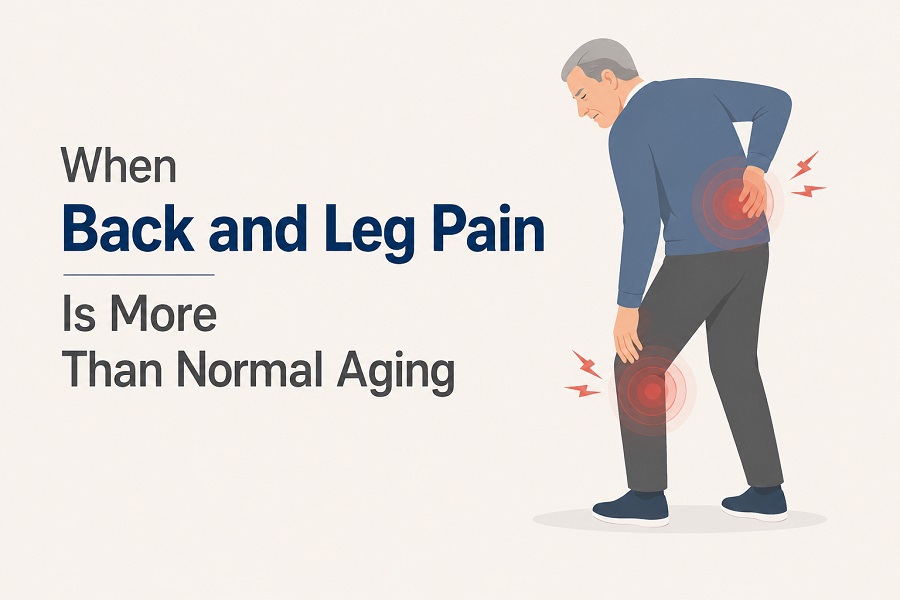
Back and leg pain can be easy to explain away. Someone gets older, starts walking less, wakes up stiff, or feels a sharp pull after lifting something awkwardly. A few days of soreness may not seem unusual.
Still, some pain patterns deserve a closer look. Pain that travels into the leg, numbness, tingling, weakness, or walking trouble can point to nerve pressure rather than ordinary stiffness. A person reading about whether a herniated disc can heal on its own is usually asking a practical question: can this improve with time, or is the body signaling something more serious?
Why back and leg pain can be confusing
Back pain does not always tell a clear story. A mild image finding can hurt a lot. A serious-looking scan may cause no symptoms at all. Pain can start in the lower back, then move into the buttock, thigh, calf, or foot.
That is why the pattern of symptoms is often more useful than the pain level alone.
A herniated disc and spinal stenosis can both irritate nerves. Both can cause leg symptoms. Both can affect walking. The difference is often in how symptoms start, what triggers them, and what positions bring relief.
A herniated disc often starts with nerve irritation
A herniated disc happens when soft material inside a spinal disc pushes through the outer layer. If that material presses on or irritates a nearby nerve, pain may travel away from the back.
In the lower spine, that can feel like sciatica. The pain may run from the buttock into one leg. It may feel sharp, burning, electric, or deep. Some people also notice tingling, numbness, or weakness in the foot or leg.
Symptoms may improve with time
Many herniated discs improve without surgery. That does not mean the pain is imaginary or minor. It means the body may calm inflammation, absorb some disc material, or reduce nerve irritation over time.
The hard part is knowing when rest and conservative care are reasonable and when symptoms call for faster medical attention.
Pain that is slowly easing, strength that remains steady, and symptoms that respond to guided movement may fit a watchful plan. Worsening weakness, trouble walking, or bladder and bowel changes do not belong in that category.
Spinal stenosis can look like aging at first
Spinal stenosis usually develops more gradually. It happens when spaces in the spine become narrowed. That narrowing can put pressure on nerves, especially during standing or walking.
The symptoms can seem like ordinary aging because the first changes may be subtle. An older adult may stop taking long walks. Grocery trips may feel harder. Standing in a line may bring on leg heaviness, cramping, numbness, or weakness.
A person may sit for a few minutes and feel better. Then symptoms return once they stand or walk again.
That pattern is one reason spinal stenosis symptoms older adults mistake for normal aging can go unnoticed until daily movement has already changed.
Walking limits are an important clue
Stenosis often shows up through walking tolerance. A person may say their legs feel tired, heavy, or painful after a certain distance. They may lean forward on a shopping cart because that position eases symptoms.
That detail can help separate stenosis from general back stiffness. Stiffness may loosen with movement. Stenosis-related symptoms often build during standing or walking and settle when the person sits or bends forward.
How the two conditions can feel different
A herniated disc may start suddenly after lifting, twisting, coughing, or a simple movement that catches the back at the wrong time. The pain may shoot down one leg and feel tied to a specific nerve path.
Spinal stenosis often comes on more slowly. It may affect both legs, though one side can feel worse. The person may not remember a clear injury. Instead, they notice that daily routes have become shorter.
Timing gives useful clues
The timing of pain can tell a story.
A herniated disc may hurt more with sitting, bending, coughing, sneezing, or certain leg positions. A person may struggle to find a comfortable posture during an acute flare.
Spinal stenosis may worsen with standing upright or walking. Sitting, leaning forward, or resting may bring relief.
These patterns are not perfect. They also do not replace a medical exam. They do help a clinician decide what questions to ask and what tests may be needed.
When symptoms should be checked
Back pain that stays in the back and improves over days may not need urgent care. Pain with nerve signs deserves more caution.
Call a healthcare professional when back pain spreads into an arm or leg, especially with numbness, tingling, or weakness. An exam can check reflexes, strength, sensation, gait, and movements that reproduce or calm symptoms.
Seek urgent care for bladder or bowel problems, numbness around the groin or saddle area, severe or worsening weakness, fever, unexplained weight loss, trauma, or pain that does not let up.
Those symptoms do not mean a person should panic. They mean the situation needs prompt medical review.
Why imaging is not always the first answer
People often want an MRI right away. Sometimes imaging is needed. Other times, the first step is a history and physical exam.
A scan can show disc changes, narrowing, arthritis, or other findings. The challenge is matching those findings to the symptoms. Many adults have spine changes on imaging that are not the main source of their pain.
A clinician may start with conservative care if symptoms are stable. That may include activity changes, physical therapy, anti-inflammatory medication when safe, heat or ice, walking plans, or injections in selected cases.
What conservative care may involve
Conservative care does not mean ignoring the problem. It means using non-surgical steps first when the symptoms and exam allow it.
A care plan may include:
- Short rest during an acute flare
- Gentle return to movement
- Physical therapy
- Core and hip strengthening
- Safer lifting habits
- Medication review
- Injections for selected nerve pain
- Walking or activity adjustments
The plan should be specific to the diagnosis. Exercises that help one condition may irritate another if done too early or too aggressively.
When surgery enters the conversation
Surgery is not the first step for every herniated disc or spinal stenosis case. It may enter the conversation when pain, weakness, walking limits, or daily disability continue despite an adequate trial of non-surgical care.
For a herniated disc, surgery may be discussed when nerve compression causes lasting leg pain or weakness. For spinal stenosis, surgery may be discussed when walking limits and nerve symptoms keep shrinking daily life.
The best decision usually depends on the exam, imaging, symptom duration, overall health, and how much the condition interferes with normal activity.
FAQ
Can a herniated disc heal without surgery?
Many herniated discs improve without surgery. Symptoms may settle over weeks or months with conservative care. A medical exam is still important when pain spreads into the leg or comes with numbness, tingling, or weakness.
How can spinal stenosis be mistaken for aging?
Spinal stenosis can look like aging because it may start with shorter walks, leg heaviness, slower movement, or more sitting breaks. The clue is the pattern. Symptoms often worsen with standing or walking and improve with sitting or leaning forward.
Is leg pain more concerning than back pain?
Leg pain can suggest nerve involvement, especially when it travels below the knee or comes with tingling, numbness, or weakness. It should be evaluated if it persists, worsens, or affects walking.
Should older adults ignore back stiffness?
No. Mild stiffness can be common, but back pain that changes walking, causes leg symptoms, or keeps returning should be checked. The goal is to find the source before people avoid movement for too long.
Key Takeaway
Back and leg pain should not be dismissed just because someone is getting older. A herniated disc may improve with time, while spinal stenosis may show up through shrinking walking distance and relief with sitting. The pattern of symptoms often gives the best first clue. When pain travels, strength changes, or daily movement starts to shrink, the next step should be a medical review rather than another round of guessing.
Sources
Today’s Top Questions: Can A Herniated Disc Heal On Its Own?
Today’s Top Questions: Spinal Stenosis Symptoms Older Adults Mistake for Normal Aging
American Academy of Orthopaedic Surgeons: Herniated Disk in the Lower Back
Mayo Clinic: Herniated Disk
Mayo Clinic: Spinal Stenosis
