
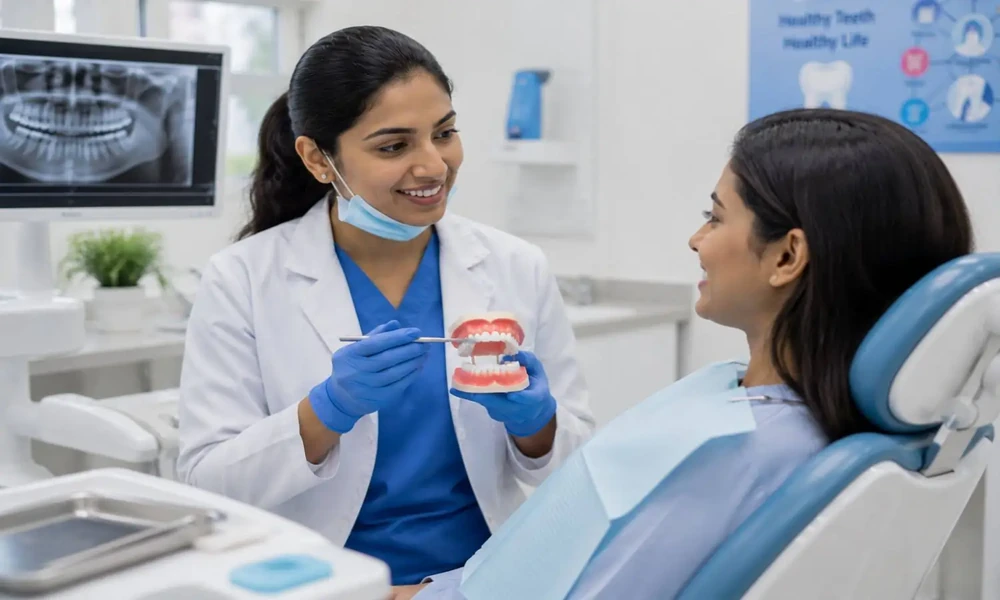
You notice it every time you catch your reflection. Maybe the front tooth is chipped, darkened, cracked, or has an old filling that keeps drawing your eye. Other people may not stare at it the way you do, but that usually does not help. When a damaged tooth sits right in your smile line, a general dentist in Stamford CT can help restore its appearance and function, so it can affect less how you eat, speak, laugh, and show up around other people.
A dental crown for a front tooth can restore strength and improve appearance at the same time. It covers the visible tooth structure, protects what is underneath, and can be matched to the color and shape of your natural teeth. If the tooth is badly worn, broken, or weakened after treatment, a crown is often the most reliable way to keep it functional and make it look like it belongs in your smile again.
A visible tooth problem often feels bigger than it looks
A tooth you can see when you smile carries a different kind of pressure. A molar in the back can hurt and still stay hidden. A front or side tooth does not get that privacy. You may find yourself smiling with your lips closed, covering your mouth when you laugh, or replaying every conversation afterward, wondering if the other person noticed.
The stress is not only cosmetic. A damaged front tooth is exposed to daily force from biting, temperature changes, and habits like clenching. A small crack can spread. A large filling can weaken the remaining tooth walls. A tooth that has had a root canal may no longer hurt, but it can become more brittle over time. That is usually when people start hearing the phrase tooth crown for a visible tooth from their dentist.
Crowns are not one-size-fits-all. For a tooth in your smile, the goal is not just coverage. The crown has to blend in. Shape, translucency, surface texture, and color matter. According to MedlinePlus information on crowns, crowns are commonly used to restore broken teeth, support teeth with large fillings, and improve the look of misshapen or discolored teeth. That mix of function and appearance is exactly why they are often recommended for visible teeth.
Material choice affects how your smile looks and how the crown holds up
The material matters more when the tooth shows. All-ceramic and porcelain crowns are common choices because they reflect light in a way that looks more like enamel. Porcelain fused to metal crowns can still work well, but in some cases the metal underneath affects the final look, especially near the gumline. Zirconia crowns are strong and can also look very natural, though the best choice depends on your bite, grinding habits, and how much healthy tooth remains.
The National Institute of Dental and Craniofacial Research explains in its guide to dental materials that different restorative materials vary in strength, wear resistance, and appearance. That is why a cosmetic decision is also a structural one. If you grind your teeth at night, the crown has to survive that pressure. If the tooth sits next to very translucent natural teeth, the crown has to mimic that look closely or it may stand out.
There is also the question of whether a crown is the right fix at all. Some teeth do better with bonding or veneers if the damage is minor and the tooth is still strong. A badly cracked tooth, a tooth with a large failing filling, or a tooth that has lost too much structure usually needs more coverage. A good general and cosmetic dentist looks at the whole picture instead of pushing the same treatment every time.
A dental crown can solve the visible problem and the hidden one
People often come in focused on the stain, the chip, or the uneven edge. The bigger problem may be under the surface. Decay can hide around old dental work. Cracks can run deeper than expected. Bite pressure may be hitting that tooth harder than the others. If you only smooth the edge or patch the surface, the tooth may keep breaking down.
This is where a cosmetic dental crown earns its value. It restores the outside shape you see and supports the inside structure you do not. If the tooth has already had root canal therapy, the need for protection becomes even more important. The National Center for Biotechnology Information explains in its review of endodontic treatment and restoration that restoring and protecting a treated tooth is a key part of long-term success.
| Option | Best For | Pros | Limits |
|---|---|---|---|
| Dental bonding | Small chips, minor shape changes | Conservative, lower upfront cost, often done quickly | Less durable, can stain or chip more easily |
| Veneer | Cosmetic changes on a mostly healthy front tooth | Natural look, strong cosmetic improvement | Does not cover the whole tooth, not ideal for major structural damage |
| Dental crown | Cracked, heavily filled, worn, or root canal treated visible tooth | Full coverage, strong protection, aesthetic customization | Requires more tooth preparation, higher cost than bonding in many cases |
Three steps can make the decision clearer and less stressful
1. Get a diagnosis before focusing on the cosmetic fix. Ask whether the issue is only appearance or if the tooth is weakened. A visible defect can distract from decay, bite damage, or a crack that needs real protection.
2. Ask to compare materials on your actual tooth. The best crown material for a back molar may not be the best one for a tooth in your smile. Ask how the crown will match neighboring teeth, how it will hold up if you clench, and whether the gumline appearance may change the final look.
3. Discuss longevity, not just today’s price. A cheaper short-term repair can become more expensive if it fails, breaks again, or leads to more tooth loss. Ask what gives the tooth the best chance of staying healthy and looking natural for years.
The right crown should help you stop thinking about that tooth
The best result is not a crown that looks obviously new. It is one that lets you smile, eat, and talk without that constant awareness of a damaged tooth. If a visible tooth has become a source of stress, a well-made crown from a skilled general and cosmetic dentist can restore both confidence and function. Take the next step by scheduling an evaluation and finding out whether a crown, veneer, or another treatment fits your smile best.
