

Choosing to get a straightening is one thing, and it is a bit puzzling, as well. Invisalign is easy to pronounce, but the main issue is that most people remain uncertain of what happens after the initial meeting. Do the aligners hurt? How long does it take? And the overall process flow, beginning to end?
Invisalign is simply a step-by-step program that puts your teeth into place in a smooth process using clear aligners designed specifically for you. No wires. No brackets. Fairness, patience, and a failure to lose faith.
If you are looking for the best Invisalign Boise in Idaho, you must contact Alexander and Hoffman Orthodontics. They offer personalized care, guiding patients through digital scans, visits, and every step without rushing or overwhelming. Such support is actually essential when you are making a commitment of months wearing aligners.
Step 1: Your Initial Invisalign Consultation
It is right here that everything starts. You sit down with the orthodontist and discuss your smile desires, crooked teeth, spacing, bite problems, or all the above.
During this visit, you will be able to expect:
- Close examination of your teeth and jaw
- Digital scans or photos (no messy impressions anymore, thankfully)
- An honest discussion about whether Invisalign is right for you.
It is relaxed. You are welcome to ask questions. Nothing is locked in yet.
Step 2: Your Personalized Treatment Plan
After the confirmation of Invisalign, actual planning begins. With the help of high-quality 3D images, your orthodontist assesses the long-term mobility of your teeth.
What happens here:
- A digital preview of your future smile
- A breakdown of how many aligners you will need
- An estimated treatment timeline.
Seeing the transformation ahead of time is motivating. It makes the process feel real.
Step 3: Receiving Your First Set of Aligners
Your aligners are ready-made to fit your mouth. They are transparent, sleek, and unusually light.
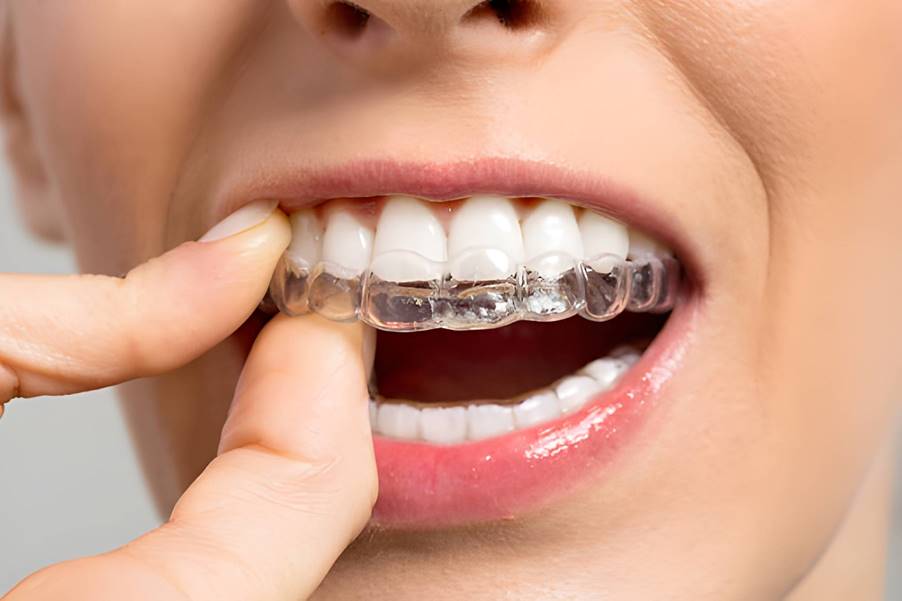
At this stage, you will learn:
- The number of hours to have the aligners daily
- When to switch to the next set
- The ways they should be cleaned and kept.
The initial days may be a bit tight. That is normal. It means things are working.
Step 4: Progress Check-Ins and Adjustments
As treatment moves forward, you will change aligners every one to two weeks. Appointments are quick and spaced out.
These visits usually involve:
- Checking how your teeth are tracking
- Picking up future aligners
- Making small adjustments if needed.
Pain is not common, but mild pressure can pop up occasionally. It fades fast.
Step 5: Finishing Treatment and Retainers
Once your final aligner does its job, you are almost done. But not quite.
The final step includes:
- Confirming your teeth are in their ideal position
- Getting fitted for retainers
- Learning how to keep your new smile stable long-term.
Skipping retainers is tempting. Don’t. Teeth love to move back.
Final Thoughts
The Invisalign process is not quick and will require discipline. Nonetheless, it is comfortable, discreet, and much less disturbing than the traditional braces. The initial consultation to the closing retainer is a progression towards the smile that is natural and deserved.
